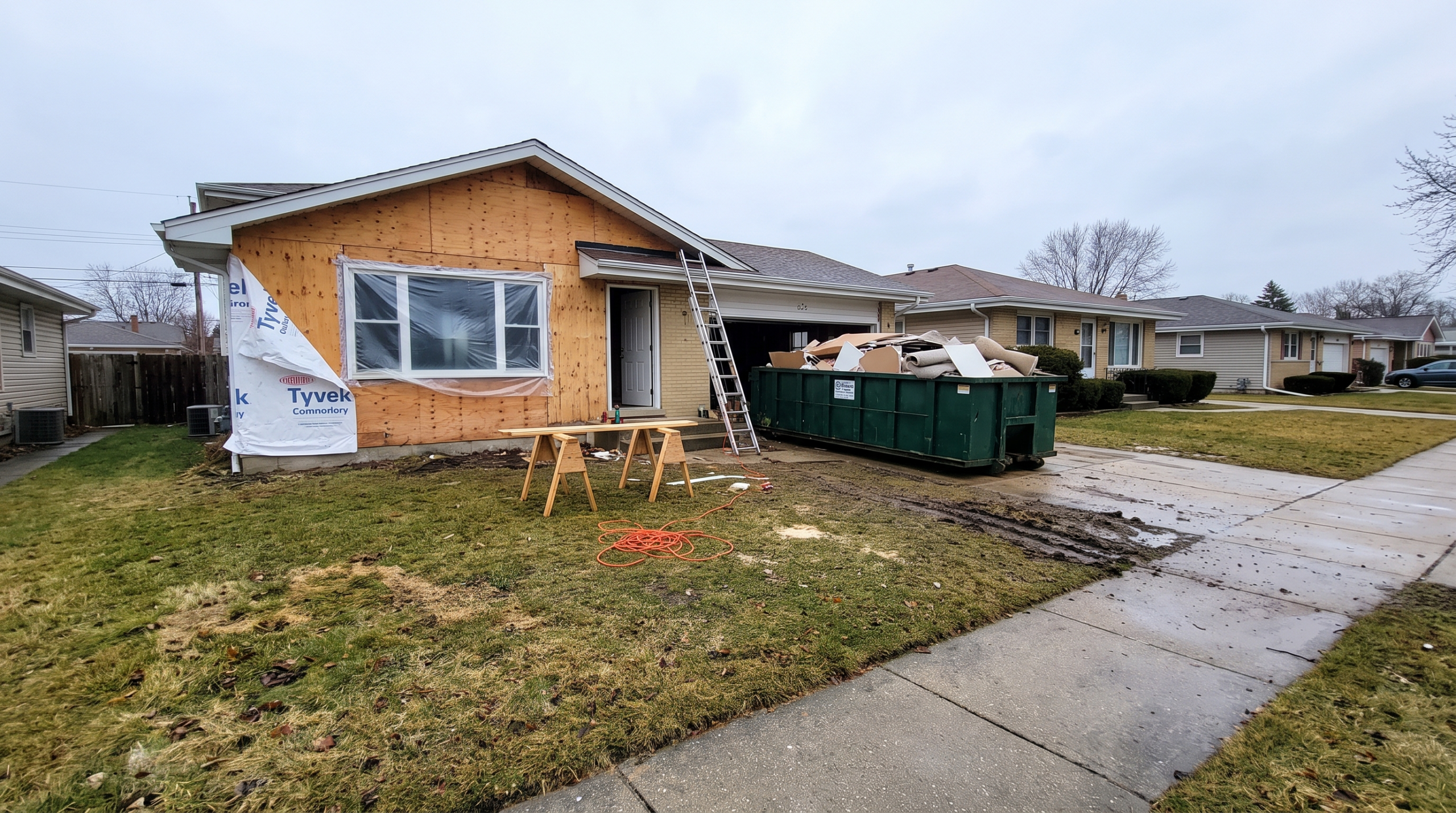

Speed, flexibility, and access to capital can make or break a real estate deal. Traditional financing is often too slow or too rigid, so active investors have long turned to hard money lenders to bridge the gap. The challenge is that hard money lenders are not all built the same. Some offer fast decisions but inconsistent terms, limited capital, or no clear compliance framework. Knowing how to tell the difference matters as much as knowing where to look. Conventus has funded $10B+ for real estate investors by building a platform that combines the speed of private lending with the structure and accountability of an institutional lender.
What Hard Money Lenders Actually Do
Hard money loans are short-term, property-backed loans built for investors, not owner-occupants. They fund strategies that traditional banks routinely decline or slow-walk: fix-and-flip and bridge acquisitions, ground-up construction, and rental portfolio expansion. The loan decision turns primarily on the property and the deal economics rather than on the borrower’s W-2 income or a six-week underwriting queue. That core mechanic has real value. The problem has historically been execution: smaller private lenders could move fast, but their capital was limited, their terms shifted deal to deal, and there was no guarantee the lender would still be in business by the time you needed them for your next project.How to Evaluate Hard Money Lenders
If you are comparing lenders, these are the questions that separate a reliable partner from a one-off arrangement.Where does their capital come from?
A lender backed by institutional capital, whether through a credit facility, a fund structure, or a warehouse line from a major bank, can fund consistently across market cycles. A lender whose capital is a network of individual investors may pull back or reprice when conditions shift. Ask directly: is this lender’s capital committed, or is it raised deal by deal?Are they licensed in your state?
Licensing requirements for private lenders vary by state. A lender operating without the required license exposes you to legal risk on the transaction and signals that their compliance infrastructure is thin. Verify licensing before you submit a deal, not after you get a term sheet.Do they have defined loan programs or just one-off terms?
Fly-by-night lenders negotiate every deal from scratch, which means you never know what you are getting until you are already deep in the process. A credible institutional lender publishes defined programs with consistent structures: clear loan-to-value limits, stated rate ranges, defined draw schedules for construction loans, and predictable closing timelines. Consistency is what lets you underwrite your own deals with confidence.What does their underwriting actually look like?
Speed and rigor are not opposites. A lender who skips underwriting to close in 48 hours is taking on risk they may eventually pass back to you through a rescinded commitment or a dispute at closing. Look for a lender who moves fast because their process is efficient, not because they have skipped steps. That means a real property evaluation, a clear draw-inspection process for construction, and documented loan terms before you sign.Can they grow with your portfolio?
Early-stage investors often start with a local contact or a referral. That works for one or two deals. Once you are running multiple projects at once, or expanding into new markets, you need a lender with the capital depth, geographic reach, and program breadth to stay useful. A lender who maxes out at a handful of simultaneous loans is a ceiling, not a partner. For a direct comparison of how institutional private lenders stack up against traditional bank financing across these dimensions, see Private Lending vs. Traditional Banks for Real Estate Investors.From Hard Money to Institutional Private Lending
Conventus was built to close the gap between the agility of hard money and the reliability of an institutional lender. Deals close in days rather than weeks. Our Relationship Managers work directly with investors rather than routing everything through a processing queue. And when a deal has a compressed timeline, there are options to adapt rather than a form letter explaining why it cannot happen. At the same time, the platform is built to hold up under scrutiny. We operate with institutional capital, defined lending programs, clear disclosures, and a footprint across 44 states. That is not a constraint on speed. It is what makes the speed reliable.Lending Programs Built Around Real Investor Strategies
Rather than fitting every deal into a single product, Conventus offers programs that align with how real estate investors actually operate.- Fix-and-flip and bridge: Short-term financing that covers acquisition, renovation, and transition between properties, with draw structures tied to construction progress.
- DSCR loans: Rental portfolio financing underwritten on property cash flow rather than personal income, useful for investors who hold multiple properties across different entities.
- Ground-up construction: Construction financing with staged draws and experienced oversight for investors building from the ground up.
- Multifamily: Capital for small and mid-size multifamily acquisitions and repositions where conventional agency financing is too slow or too restrictive.