A ground up construction loan funds a new build from lot to certificate of occupancy, and the interest reserve keeps the project cash-flow-neutral during construction. Understanding how that reserve is calculated, how it is funded inside the loan, and what a timeline slip or cost overrun does to your carry position is the difference between a project that closes cleanly and one that runs short at month 14.
What Is a Ground Up Construction Loan?
A ground up construction loan is a short-term, asset-based financing instrument that funds new construction with loan proceeds distributed in draws tied to verified milestones rather than released in a lump sum at closing. The loan is sized against the land value plus total projected construction cost and underwritten on the as-completed value of the finished asset, not the current value of the vacant lot.
Conventus, a private real estate lender that has funded $10B+ across 44 states, structures ground up construction loans for SFR 1-4 unit projects and multifamily and mixed-use projects up to 30 units, with terms up to 30 months and loan sizes up to $10,000,000. Conventus underwrites on the asset, not the borrower’s W-2, and requires one completed ground-up project across all transaction types.
How the Interest Reserve Is Structured Inside a Ground Up Construction Loan
The interest reserve is a portion of the total loan amount set aside at closing to cover monthly interest during the construction period. It is not a separate deposit. It is built into the loan structure, included in the LTC calculation alongside hard costs, soft costs, and land acquisition.
During the build phase, no rental income is coming in. Without an embedded reserve, a borrower would need to fund monthly interest out of pocket every month until the certificate of occupancy is issued. The reserve eliminates that cash drain by drawing from the account each month to cover accruing interest.
How Is the Reserve Amount Calculated?
The interest reserve is calculated from three inputs: the projected loan balance over time, the rate, and the build timeline. Because the balance grows as draws are funded, month two interest (only land draw and mobilization funded) is far lower than month ten (framing, MEP, and finishes nearly complete). Lenders model this as a draw-weighted accrual schedule, not a flat monthly figure.
On a Conventus Ground Up Construction SFR loan, maximum LTC at day one is 80% for a purchase or rate/term refi on a not-started project. The interest reserve counts against that ceiling, which is why accurate pre-underwriting modeling matters.
How Draw Schedules Work in Ground Up Construction Loans
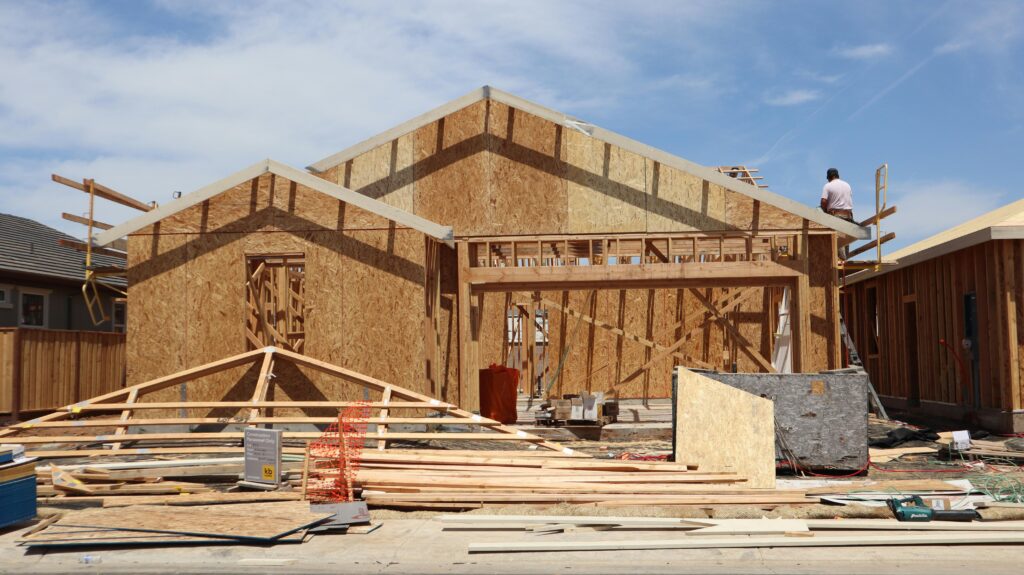
A draw schedule releases loan proceeds in stages tied to verified construction progress. No draw is funded until an inspection confirms the milestone is complete. Typical milestones: foundation, framing, rough MEP, insulation and drywall, finish work, final completion. The interest reserve draws separately and automatically each month against the funded balance.
For investors familiar with fix and flip draw schedules, ground up construction draws use the same inspection-and-release logic but with a longer timeline. A failed inspection delays the draw, extends the schedule, and increases total interest accrual against the reserve.
What Carry Costs Look Like Before the First Tenant Pays Rent
Carry costs run from loan closing to the day the asset sells or generates income. The interest reserve covers the largest line item, but it does not cover everything:
- Property taxes: Accruing from day one of ownership. Not covered by the interest reserve.
- Builder’s risk insurance: Required during construction. Not covered by the interest reserve.
- Permits and inspection fees: Typically absorbed in the soft costs budget, not the reserve.
- Soft costs: Architecture, engineering, project management, and utility hookups must be modeled into the total cost budget before the loan is sized.
A borrower who models their cash requirement as “just closing costs, the reserve handles the rest” will hit a liquidity shortfall before the certificate of occupancy is issued.
What a Timeline Delay Does to Your Ground Up Construction Loan Interest Reserve
An interest reserve sized for an 18-month build does not cover a 24-month build. When the timeline extends beyond the period used to size the reserve, it runs dry before completion. The borrower must then fund interest out of pocket or negotiate a reserve replenishment with the lender.
Supply chain disruptions, labor shortages, permitting backlogs, and weather events are consistent risk factors in residential and multifamily construction. A realistic reserve includes a buffer of two to four months beyond the expected completion date. If the project runs 20 percent over schedule, the borrower’s reserve and liquidity must still hold.
Borrowers evaluating a bridge-to-DSCR exit strategy after construction should factor reserve sizing into the refinance timeline. A reserve running thin at month 22 on a 24-month term compresses the stabilization and lease-up window that DSCR qualification depends on. Cost overruns compound the same risk: a higher funded balance increases monthly interest accrual, accelerating depletion of a reserve sized for the original budget.
How to Structure Your Interest Reserve to Match Your Build Timeline
- Use an honest timeline. If your GC says 16 months, model 20.
- Model the draw schedule accurately. Work with your lender to weight the funded balance across each construction phase.
- Budget all carry costs separately. Taxes, insurance, and inspection fees run parallel to the reserve period and are not covered by it.
- Stress-test for a 15 to 20 percent timeline extension. If the reserve hits zero in that scenario, size it larger or maintain the liquidity to fund the gap.
- Coordinate with your exit. If refinancing into a DSCR loan, review DSCR loan requirements for LLCs before the construction loan closes so the reserve covers through stabilization, not just through CO.
Ground Up Construction Loan Eligibility at Conventus
Conventus lends on SFR (1-4 units), multifamily and mixed-use (5-30 units), and multi-lot development (2 or more parcels, up to 15 units). Core requirements across all types:
- Minimum FICO score of 680
- At least one fully completed ground-up construction project
- Full appraisal required across all scenarios
- Max loan size of $10,000,000 for SFR and multi-lot; $7,500,000 for MF/MU
- Max term of 30 months
Starting rate is 8.99% for SFR and multi-lot, 9.50% for MF/MU. Investors scaling from renovation into ground-up development will find the same asset-based underwriting logic from fix and flip financing carries forward. For sequencing short-term build capital into long-term hold financing, the BRRRR framework is a useful reference.
Talk to a Relationship Manager to model your project’s interest reserve, draw schedule, and carry cost position before your next construction loan closes.
Frequently Asked Questions
What is an interest reserve on a ground up construction loan?
An interest reserve is a portion of the total loan amount set aside at closing to pay monthly interest during the construction period. It is built into the loan structure, not funded separately by the borrower, and drawn down each month as interest accrues on the funded balance. It is sized using the projected draw schedule, loan rate, and construction timeline.
How is the interest reserve amount calculated for a construction loan?
The reserve uses a draw-weighted accrual model: the lender projects the funded balance at each construction phase, applies the rate, and totals the monthly charges across the full timeline. Early months carry less interest than later months when the balance is near its peak. Borrowers should add a two to four month buffer beyond the expected completion date to account for schedule risk.
What happens if the interest reserve runs out before construction is complete?
The borrower must fund interest out of pocket or negotiate a loan modification to replenish the reserve. Depletion most commonly occurs when the timeline extends beyond the period used to size the reserve at closing. Maintain sufficient liquidity to cover a shortfall if the build runs long.
Does the interest reserve cover all carry costs during construction?
No. The reserve covers only interest. Property taxes, builder’s risk insurance, permit and inspection fees, and soft costs are separate line items the borrower funds independently. Borrowers who assume the reserve covers all carry typically hit a liquidity shortfall mid-build.
What are the eligibility requirements for a ground up construction loan at Conventus?
Conventus requires a minimum FICO of 680, at least one fully completed ground-up construction project, and a full appraisal across all scenarios. Loan sizes go up to $10,000,000 with terms up to 30 months. Conventus lends on SFR (1-4 units), multifamily and mixed-use (5-30 units), and multi-lot development across 44 states.
How does a construction loan interest reserve affect the loan-to-cost calculation?
The interest reserve is included in total project cost when calculating LTC, consuming a portion of available leverage. Borrowers who exclude it from their LTC model find the actual day-one advance is lower than expected. Pre-application modeling should include the full reserve as a cost line item alongside hard and soft costs.