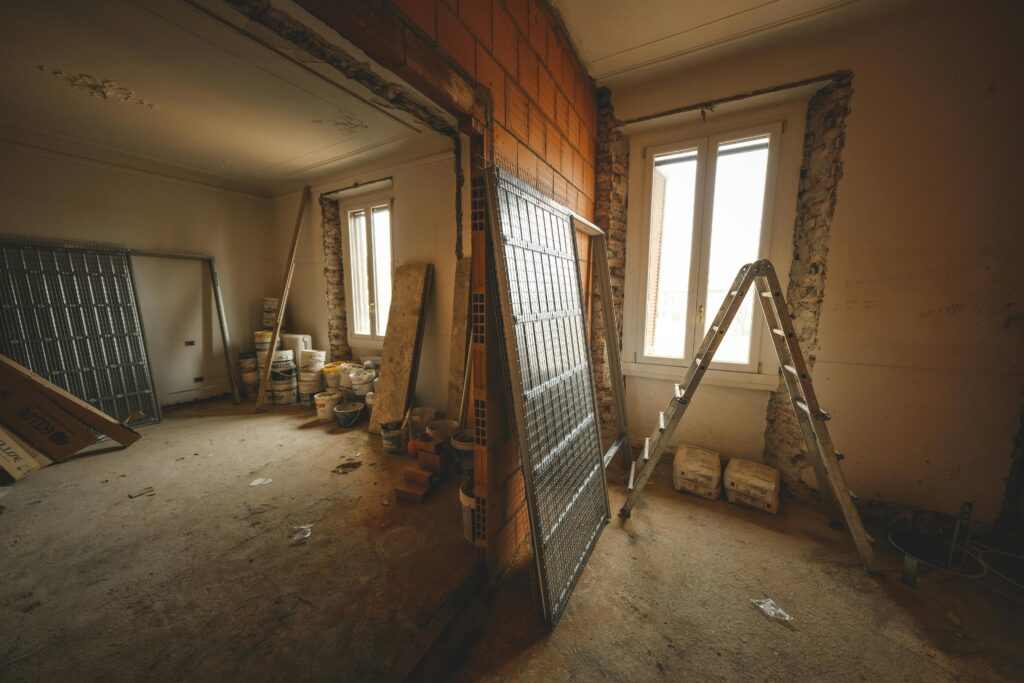
Fix and flip investing is a short-term real estate strategy in which an investor purchases a distressed property, rehabilitates it, and resells it for a profit using asset-based financing rather than a conventional mortgage. In 2026, it still works. But ATTOM data shows gross flipping returns have compressed to some of their tightest levels in over a decade.[1] The investors still closing with margin aren’t waiting for rates to drop. They rewrote their deal model.
The short answer: Fix and flip investing in 2026 remains viable when investors apply conservative ARV methodology (all-in costs at or below 70-75% of ARV), control rehab scope before committing to a deal, and source properties off-market rather than competing with owner-occupants on the MLS. The playbook has changed; the opportunity hasn’t disappeared.
Key takeaways:
- Gross flipping returns have compressed; target all-in costs at 70-75% of ARV or below
- Off-market sourcing (probate, pre-foreclosure, wholesalers) is outperforming MLS deals for investors who need margin
- Rehab scope creep combined with extended carry time is the single biggest profit killer in 2026
- Secondary Sun Belt and Southeast metros are outperforming coastal markets on fix and flip returns
- Model 120-150 days of carry time minimum; 90-day timelines assume everything goes right
Fix and Flip Market Conditions in 2026: What the Numbers Show
Where Gross Flipping Returns Stand Today
Fix and flip activity as a share of total home sales pulled back from its post-pandemic peak, with gross returns under pressure as acquisition costs rose faster than resale values in many markets.[1] The investors still active are not the ones who sat out waiting for rates to drop. They’re the ones who recalibrated their margin requirements, tightened their rehab scopes, and got selective about geography.
What to do with this: Pull the current gross return figure from ATTOM’s most recent quarterly flipping report before modeling your deal. That number is your market baseline. If your deal doesn’t produce a return meaningfully above it after carrying costs, you are taking execution risk for below-average upside.
Inventory Constraints and What They Mean for Deal Sourcing
Inventory remains the structural constraint. The chronic undersupply of for-sale housing that the Harvard Joint Center for Housing Studies has tracked for years has not resolved.[2] Fewer distressed properties are hitting the open market relative to earlier cycle peaks, which means deal sourcing requires more work and more relationships than pulling MLS data. The investors winning on acquisition are off-market operators: direct mail, wholesaler networks, probate pipelines, and driving for dollars in the zip codes where their rehab experience gives them an underwriting edge.
On the demand side, end buyers remain active in affordable and mid-tier price bands. The National Association of Realtors continues to report constrained existing home inventory nationally, which supports resale values for well-renovated properties priced correctly for their market.[3] Overpriced finishes in a neighborhood with a hard ARV ceiling is still one of the fastest ways to lose money in this business.
Deal Sourcing Strategies That Are Working in 2026
Off-Market Channels: Probate, Pre-Foreclosure, and Direct Mail
The deal sourcing environment has bifurcated. Competitive listed properties with cosmetic rehab scopes are being bid up by owner-occupants who can pay retail for a house they intend to live in. Fix and flip investors cannot win those deals at acquisition prices that leave room for margin. The deals that pencil are coming from off-market motivated seller relationships: probate, pre-foreclosure, divorce, and estate sales generate inventory at prices that accommodate investor margins. These require consistent outreach, not a one-time campaign.
How to Evaluate a Wholesaler Relationship
Not every wholesaler is pricing deals for investor profit. The ones worth maintaining relationships with understand your buy box and bring you deals inside it, not at the edge of it. Before committing capital to a wholesaler’s deal, evaluate whether their ARV methodology matches yours. A wholesaler who prices ARV at the top of a broad comp range and backs into an acquisition price is not your partner. A wholesaler who understands your 70% rule and brings you deals that clear it is.
The B/C Condition, A/B Neighborhood Formula
The asymmetry between condition discount at acquisition and ARV premium at resale is where fix and flip margin lives. A fully dated 1980s kitchen in a neighborhood where finished comps trade at a significant premium is a legitimate deal. A cosmetically distressed property in a neighborhood where ARVs are flat is not. REO and bank-owned inventory follows the same logic: motivated institutional sellers move assets at prices that work for experienced operators willing to move quickly with proof of financing.
Rehab Cost Benchmarks and Scope Management in 2026
Where Costs Have Stayed Elevated
Construction material costs remain elevated relative to pre-2020 baselines, even after some commodity price normalization. The Bureau of Labor Statistics Producer Price Index for construction inputs tracked sustained price pressure across lumber, electrical components, and HVAC systems through the back half of the cycle.[4] Labor costs in skilled trades have not come down. In most active flip markets, you are paying more per hour for a reliable general contractor’s crew than you were five years ago, and reliable is the operative word.
The Four Scope Errors That Kill Flip Profitability
The failure mode that kills flip profitability is not identifying that costs are elevated. It’s underestimating scope. Investors who have compressed margins in this environment frequently did so by making one of four errors:
- Misclassifying scope intensity. Scoping a cosmetic rehab that opened walls and revealed plumbing or electrical that had to be brought to code. A cosmetic deal that turns structural is a budget reset.
- Underestimating permitting timelines. Municipalities that added review cycles post-2020 can add 4-8 weeks to a project that was modeled on legacy approval speeds. Pull permit history for the specific jurisdiction before you close.
- Contractor schedule slippage. Carrying a property three to five months longer than the pro forma because a contractor missed a milestone is a margin event, not a minor inconvenience. A 60-day slip at 8% annualized carrying cost on a $400,000 loan is roughly $5,300 in unmodeled expense.
- Finishing above the neighborhood ARV ceiling. Premium finishes in a neighborhood where buyers will not pay for them is capital destruction. Know your buyer before you specify your finishes.
The fix for most of these is not a better spreadsheet. It’s a more conservative scope classification and a contractor relationship with enough deal history behind it that you can trust the estimate. New market, new contractor, heavy scope: that combination requires a wider margin cushion than your model probably shows. Build a 15-20% contingency into every rehab budget before you close.
How to Model Fix and Flip Profit Margin at Current Rates
The Right ARV Methodology for a Compressed Market
ARV should be calculated from comparable sales closed within the past 90 days, within a quarter mile, at comparable condition and size, not from the best-case sale in a six-month radius. The most common ARV error in 2026 is using the highest closed sale in a comp set rather than the midpoint of a tight, recent range. The comp ceiling is the number; price your deal to the midpoint. If a deal only works at the top end of the comp range, it doesn’t work.
Timeline Modeling: Why 90-Day Pro Formas Break Deals
A deal modeled for a 90-day renovation and 30-day sale is a deal modeled for everything going right. Model 120-150 days of carry instead. If you close in 90, you made more money. If you don’t, you haven’t blown up a deal that was never priced to absorb a delay.
Short-term fix and flip loans in 2026 are priced in the 7-10% range depending on LTV, borrower experience, and rehab scope. Asset-based lenders structure these with draw schedules tied to construction milestones, meaning the full rehab budget is not disbursed upfront. Understanding draw mechanics before you commit to a deal is the difference between a contractor timeline that works and one that stalls your exit.
| Metric | Target / Benchmark |
|---|---|
| All-in cost as % of ARV | 70-75% maximum; 65-70% preferred in compressed markets |
| Rehab contingency buffer | 15-20% of rehab estimate (minimum 20% for systems work) |
| Carry timeline model | 120-150 days minimum (not 90) |
| ARV comp window | 90 days, quarter-mile radius, midpoint of range |
| Typical loan term | 12-18 months |
| Rate range (current market) | 7-10% depending on LTV and scope |
For a deeper look at how to vet lender draw schedules, ARV methodology, and repeat borrower programs before you’re under contract, see the Conventus guide to choosing a fix and flip lender.
Best Markets for Fix and Flip Investors in 2026
Geography matters more in a compressed-margin environment than it did when rising prices were lifting ARVs across most markets. The zip codes generating the most consistent fix and flip activity share a few traits: population and employment growth driving housing demand, a below-median price tier with genuine value-add inventory, and a resale market where days on market for well-priced renovated homes stays tight.
Secondary and tertiary markets in the Sun Belt and Southeast have continued to outperform for active operators on these criteria. CoreLogic’s home price tracking shows that many affordability-constrained coastal metros are running well below the appreciation rates of select inland Sun Belt metros in the $200,000-$350,000 price band.[5] For fix and flip operators, that spread is where the geography thesis lives.
The markets to avoid are the ones where you are competing against institutional capital for limited distressed inventory. Large SFR institutional buyers have reduced their acquisition activity, but they have not left the market. In the zip codes where they remain active, individual operators are typically not winning on price.
For state-level market analysis, the Conventus blog covers Texas, North Carolina, and Tennessee in depth: Texas market dynamics, North Carolina investor opportunity, and Tennessee from a local investor perspective.
When to Convert a Flip to a Hold: The DSCR Exit
A flip-to-hold conversion makes sense when a stabilized, fully renovated property cannot achieve its target resale price within the loan term, but the asset generates sufficient rental income to qualify for a DSCR refinance. The pivot preserves the asset and avoids a forced sale below target. This is the same acquire-now, stabilize, refinance-into-long-term-hold logic that underpins the BRRRR strategy, applied to a deal that started as a flip. For a full breakdown of how that framework works across each stage, see the Conventus guide to mastering the BRRRR strategy.
Investors who structure their financing with this optionality built in give themselves an exit lane that pure flippers don’t have. The mechanics of structuring bridge financing for a clean DSCR refinance exit are covered in depth in the Bridge to DSCR piece published in May 2026. If your rehab produces a stabilized asset with a DSCR ratio above 1.0, you have a refinance pathway even if the resale market is soft at the moment your loan matures.
Fix and Flip Financing: What Lenders Are Underwriting Differently in 2026
Private lenders serving fix and flip investors have tightened underwriting in ways that experienced operators saw coming but newer entrants have found surprising. Asset-based lending still focuses on the deal, not the borrower’s W-2. But the deal is being underwritten more conservatively than it was in the looser capital environment of 2021-2022.
Practically, this means ARV appraisals are scrutinized more carefully, comp selection methodology matters, and lenders with real underwriting staff (not automated algorithms approving deals against a price tape) are applying market-by-market judgment to whether the ARV supports the loan amount requested.
Conventus, a private real estate lender that has funded $10B+ across 44 states, applies human underwriting to every deal. For fix and flip financing, that means a Relationship Manager who understands your market, your scope, and your track record, and who can get you a term sheet before your competition closes with someone slower.
Conventus Fix and Flip Loans (SFR): Starting at 7.49% for cosmetic and moderate rehab. Up to 95% LTV on purchase. 12-18 month terms. Minimum FICO 680. No prior experience required. Draw schedules structured to match your construction timeline.
Talk to a Relationship Manager and run your next deal scenario before you’re under contract. The investors who close with confidence are the ones who know their financing is locked before the earnest money is at risk.
Frequently Asked Questions
Is fix and flip investing still profitable in 2026?
Fix and flip investing remains profitable in 2026, but margin discipline is more critical than in prior years. Gross returns have compressed as acquisition costs, rehab expenses, and carrying costs have all risen. Investors generating consistent returns are doing so through tighter ARV underwriting, conservative scope classification, faster renovation timelines, and off-market deal sourcing rather than competing for listed properties against owner-occupants who can pay retail.
What is the biggest risk in fix and flip investing right now?
The biggest risk in fix and flip investing in 2026 is scope creep combined with extended carry time. A renovation that opens walls and reveals deferred maintenance, permitting delays, or contractor execution failures can add two to four months of carrying cost to a deal modeled on a 90-day timeline. In the current rate environment, that additional carry cost can eliminate a deal’s margin entirely. Conservative scope classification and a credible general contractor relationship are the most effective risk mitigations.
How do I find fix and flip deals in 2026?
The most productive deal sources in 2026 are off-market channels: direct mail to motivated seller segments (probate, pre-foreclosure, absentee owners), established wholesaler relationships with investors who understand your buy box, and referral networks built from prior closings. Listed properties in competitive markets are generally priced to reflect retail demand from owner-occupants, which leaves insufficient margin for an investor who needs to carry rehab costs, financing costs, and a resale commission before netting a return.
What financing do I need for a fix and flip in 2026?
Fix and flip investors use short-term, asset-based bridge financing rather than conventional mortgages. These loans are underwritten primarily on the property’s after-repair value and the deal structure, not the borrower’s personal income. Loan terms typically run 12-18 months, with interest rates reflecting current short-term rate levels and the lender’s asset-based risk assessment. Draw schedules tied to construction milestones are standard, with the lender funding rehab budget draws as work is completed and inspected.
When should a fix and flip investor consider converting to a hold?
A flip-to-hold conversion makes sense when a stabilized, fully renovated property cannot achieve its target resale price within the loan term, but the asset generates sufficient rental income to qualify for a DSCR refinance. The pivot preserves the asset and avoids a forced sale below target. The key underwriting question is whether the property’s projected rental income produces a DSCR ratio above the lender’s minimum threshold, typically 1.2x or higher.
What is a good ARV percentage for fix and flip deals in 2026?
Most experienced operators target an all-in cost (purchase plus rehab plus carrying costs plus resale costs) at or below 70-75% of ARV. In compressed-margin markets, staying at or below 70% is the safer threshold. The ARV figure itself should be calculated using a tight comp set of closed sales within the past 90 days in the same street section, not the high end of a broad comp range.
How much should I budget for rehab cost overruns in 2026?
Build a 15-20% contingency into every rehab budget before you close on a deal. Cosmetic flips with low structural risk can run closer to 10%, but any deal involving systems (HVAC, electrical, plumbing, roof) or wall-opening work should carry at least 20% contingency. Permitting delays and contractor schedule slippage are the most common sources of overrun, not just material costs.
What credit score do I need for a fix and flip loan?
Most private lenders require a minimum FICO of 660-680 for fix and flip financing, with better rates and LTV terms available at 700+. Unlike conventional mortgages, fix and flip lenders prioritize the deal’s ARV and the investor’s track record over personal income documentation. First-time investors can qualify on single-family rehab deals with no prior flipping experience at many lenders, including Conventus, which requires a minimum 680 FICO with no prior experience required for SFR.
What is the 70% rule in fix and flip investing?
The 70% rule states that an investor should pay no more than 70% of a property’s after-repair value (ARV) minus estimated rehab costs. For example, on a property with a $300,000 ARV and $50,000 in estimated repairs, the maximum purchase price under the 70% rule would be $160,000 ($300,000 x 0.70 minus $50,000). In 2026’s compressed-margin environment, many experienced operators target 65-70% to create additional buffer for carrying costs and contingency.
How long does a fix and flip take in 2026?
Most fix and flip projects run 4-6 months from acquisition through closing on resale, though investors should model 5-6 months minimum to account for permitting delays, contractor scheduling, and resale time on market. Experienced operators who complete cosmetic-only rehabs in controlled markets can execute in 90-120 days, but that timeline assumes everything goes right. Build 120-150 days into your carry cost model to protect margin.
Sources
- ATTOM Data Solutions. U.S. Home Flipping Report. Published 2025.
- Harvard Joint Center for Housing Studies. The State of the Nation’s Housing. Published 2024.
- National Association of Realtors. Existing Home Sales. Updated monthly.
- U.S. Bureau of Labor Statistics. Producer Price Indexes. Updated monthly.
- CoreLogic. U.S. Home Price Insights. Updated monthly.